Emergency Watchlist
For the third year in a row, Sudan tops the International Rescue Committee’s (IRC) Emergency Watchlist as the country most at risk of new or worsening humanitarian crises. Sudan’s collapse is accelerating due to a catastrophic civil war that has had a devastating impact on civilians.
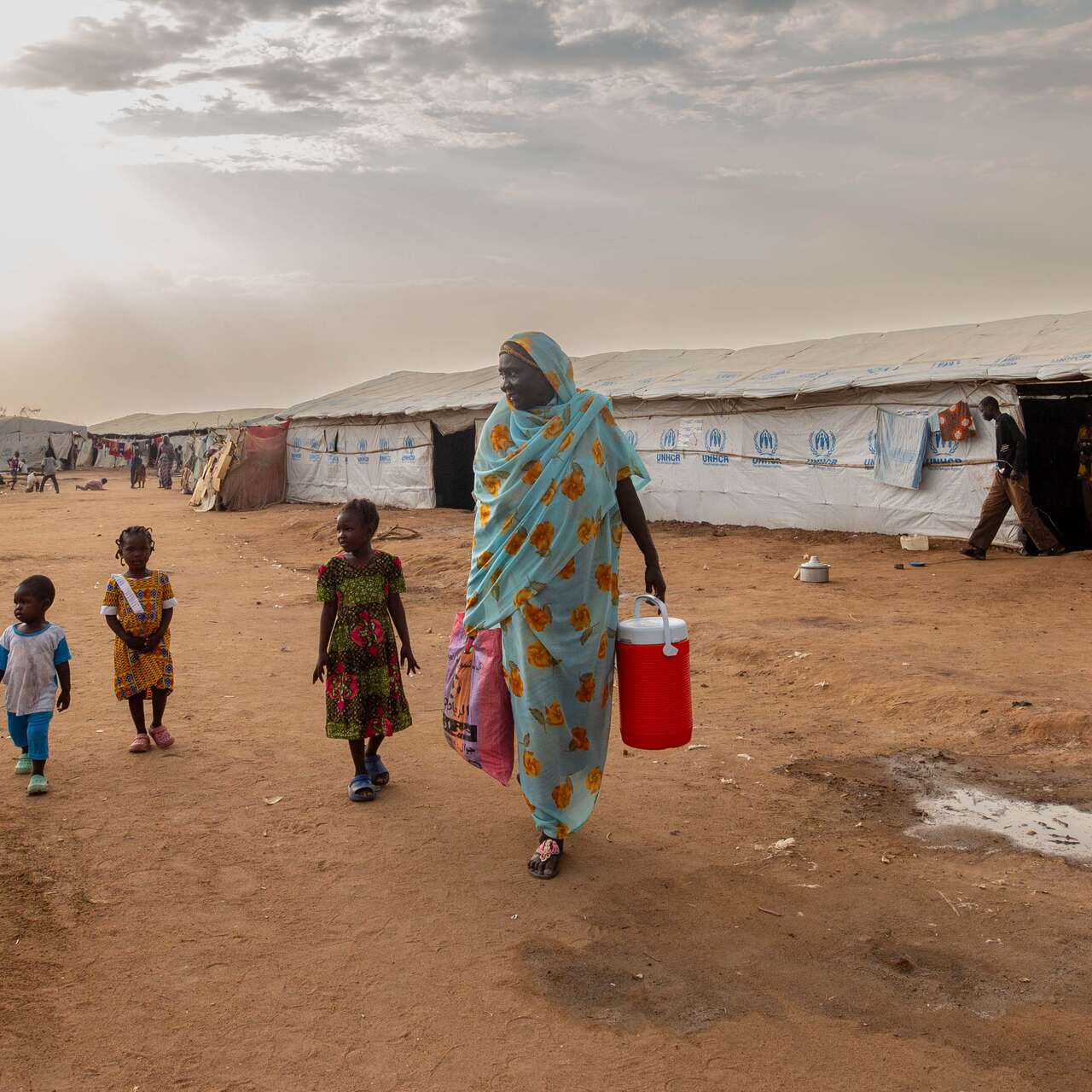
Even before the war in Sudan erupted in April 2023, the country was already experiencing a severe humanitarian crisis that left 15.8 million people in need of aid. Now, three years of war have drastically worsened these conditions, displacing over 14 million people and leaving 33.7 million people - two-thirds of the population - in need of humanitarian support. The country’s food system has been pushed to the brink, with millions of families now surviving on just one meal a day, or less
Sudan is the largest humanitarian crisis in the world in terms of number of people who need humanitarian aid. It is also the largest and fastest displacement crisis.
Three years of civil war have decimated Sudan. Civilians are subject to frequent attacks and human rights violations, while the country’s health care system has collapsed as life-threatening famine sets in. Attacks on humanitarian aid workers have made it difficult to deliver lifesaving aid to some of the most fragile and vulnerable communities in the world.
Sudan’s civil war, waged between the Sudanese Armed Forces (SAF) and the Rapid Support Forces (RSF), erupted on April 15, 2023, plunging the country into chaos. Civilians bear the brunt of the conflict; sexual violence is widespread, fighters on both sides regularly target civilians and infrastructure, and child soldier recruitment is common.
More than 150,000 people have been killed, with indiscriminate attacks on civilians being reported. With over 30 million people in need of humanitarian aid, Sudan accounts for 10% of global needs.
Escalating drone strikes on El Obeid, the capital of North Kordofan state, are killing civilians, cutting off access to food, water, and fuel, and paving the way for a ground offensive that would put hundreds of thousands of people at grave risk.
Diplomacy is paralyzed as both SAF and RSF leaders have little incentive to do a deal since they and their regional backers continue to profit from Sudan’s war. Large quantities of gold flow out of the country, while increasingly advanced weapons move in the opposite direction.
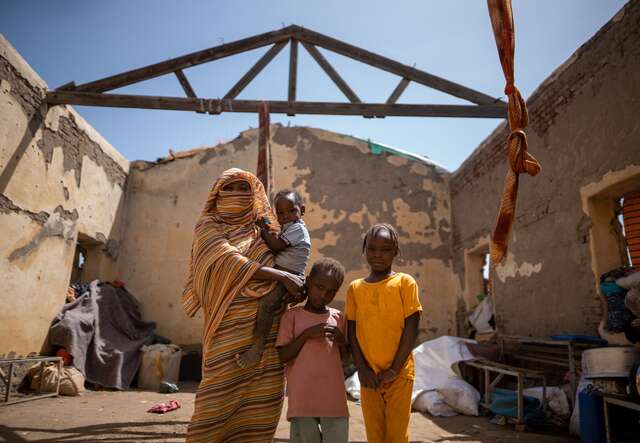
The war in Sudan has created extreme levels of displacement, both internally and across Sudan’s borders. More than 14 million people have been displaced since April 2023, including more than 4 million people who have fled to neighbouring countries.
While neighbouring countries—such as Chad and South Sudan—have welcomed Sudanese refugees fleeing conflict, they lack the resources to meet the urgent humanitarian needs of those arriving across the border without international support. Across the region, the scale of need is outpacing the response. Communities that have shown extraordinary solidarity are now being stretched beyond their limits, raising the risk of deepening instability
The majority of displaced Sudanese, 8.8 million people, remain in the country, where they struggle to access clean water, food, health care and essential survival supplies.
Meet three Sudanese heroes who have risked their lives to save others.
Famine conditions are spreading across Sudan as violence severely hinders humanitarians’ ability to deliver food where it's needed most. A joint IRC report highlights how ongoing conflict between the Sudanese Armed Forces (SAF) and the Rapid Support Forces (RSF), alongside allied armed groups, has turned the journey of food from farms to markets to homes, into a dangerous and often deadly process.
More than half of Sudan’s population, 28.9 million people, are now acutely food insecure, including over 10 million facing severe or extreme levels of hunger. The severe food shortage also leaves people vulnerable to illness and infection due to a lack of essential nutrients.
More people are living in famine conditions in Sudan than the rest of the world combined.
“For three years, we have warned that Sudan was on the brink of catastrophe, and those warnings have gone unanswered,” says IRC Country Director, Richard Data.
“Without urgent action to scale up funding and ensure aid can reach those in need and without real political pressure to end the violence and the relentless attacks on civilians, this crisis will continue to spiral further out of control, with consequences that continue to be felt far beyond Sudan.”
The war in Sudan has devastated the country’s public infrastructure, including its health system. More than 70% of Sudan’s hospitals have been destroyed, leaving millions without access to essential medical care as disease outbreaks surge. With health care access severely limited, a cholera outbreak has spread across Sudan, resulting in more than 120,000 confirmed cases and over 3,000 deaths.
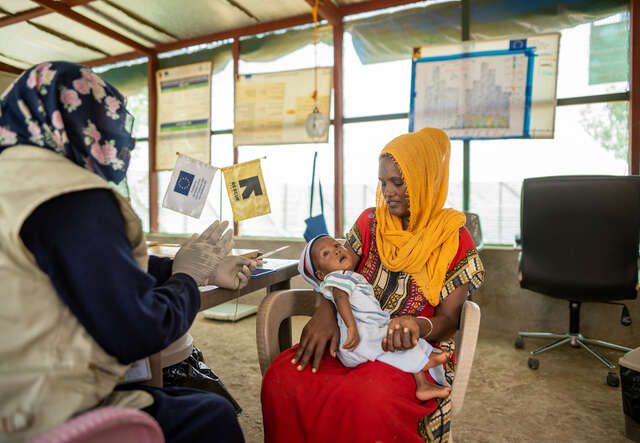
The ongoing crisis in Sudan is taking a devastating toll on women and girls. The collapse of critical health care services has put new mothers at risk of losing their lives in the months ahead, as it has become nearly impossible to access essential reproductive care.
Gender-based violence is escalating. Reports of intimate partner violence, sexual exploitation, abuse and trafficking are widespread, while survivors struggle to access support. Economic hardship has stripped countless women of their livelihoods, forcing many into desperate and exploitative situations, and increasing their vulnerability.
In Darfur, alarming reports of sexual violence underscore the immense suffering endured by those in dire conditions, revealing the exceptional vulnerability of women and children.
Urgent action is needed to address these atrocities and provide support to those affected.
The IRC has scaled up its humanitarian response in Sudan despite immense challenges, including office closures and suspensions due to security concerns. We are supporting Sudanese communities by delivering:
Shortly after conflict broke out in April 2023, the IRC established a presence in Wad Madani, Al Jazirah state where we delivered health and nutrition services to IDPs fleeing Khartoum until we were forced to close the office and relocate our staff. We currently operate in Blue Nile, Khartoum, Gedaref, River Nile, South Kordofan, West Darfur, North Darfur and White Nile states, and have an office in Port Sudan.
The IRC delivers direct support to clients in accessible areas of Khartoum, as well as indirect support through our locally-based community partners.
In El Fasher, Darfur, the IRC works with a local partner to deliver mobile health and nutrition services. We also manage five primary health care units and provide emergency water supply in Tawila, Darfur. Additionally, we operate mobile health and nutrition teams in the Tawila and Um Jalbakh regions to serve displaced communities.
You can help—support the IRC’s response today.
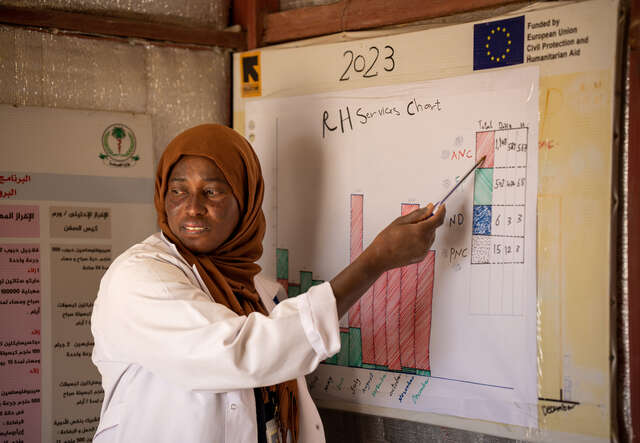
More than 4.5 million Sudanese refugees have sought safety in neighbouring countries since April 2023. In response, the IRC has scaled up our critical services to support them, including in Ethiopia, South Sudan and Chad.
In Ethiopia, the IRC is providing emergency aid and long-term support to refugees and local communities affected by conflict and climate shocks. This includes health care, nutrition, education, protection for women and children, and livelihood support. With active programs in nine regions, the IRC continues to help Sudanese refugees rebuild their lives.
The IRC has supported Sudanese refugees in eastern Chad since 2004. More than ninety percent of the 850,000 Sudanese refugees who have arrived in Chad since April 2023 are women and children. One-fifth of young children who arrive are experiencing acute malnutrition.
As new arrivals continue to cross the border, the IRC is expanding health, nutrition, and protection services, as well as access to clean water, sanitation, and mental health support. Teams are being deployed to refugee camps and host communities to meet growing needs.
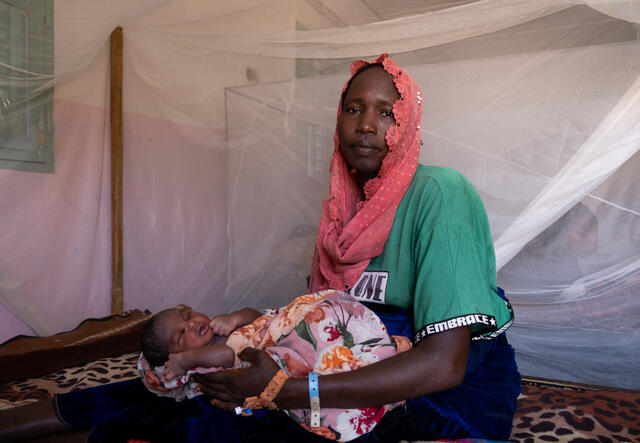
The International Rescue Committee (IRC) is delivering comprehensive humanitarian aid across Sudan and in neighbouring countries where refugees are seeking safety. Our teams are on the ground, navigating security risks and displacement, to bring care directly to those most in need, including in difficult-to-access regions at the frontline of war.
Your support can help the IRC deliver lifesaving medical services, food, water, livelihood assistance and other essential aid, where it's needed most.
The International Rescue Committee (IRC) helps people affected by humanitarian crises to survive, recover and rebuild their lives. We deliver lasting impact by providing health care, helping children learn, and empowering individuals and communities to become self-reliant, always with a focus on the unique needs of women and girls. Our work spans more than 40 crisis-affected countries, and we provide resettlement, asylum, and integration services in communities across the United States and Europe, including supporting refugees rebuilding their lives in the UK.

